AR in Education: Making Abstract
Ideas Tangible
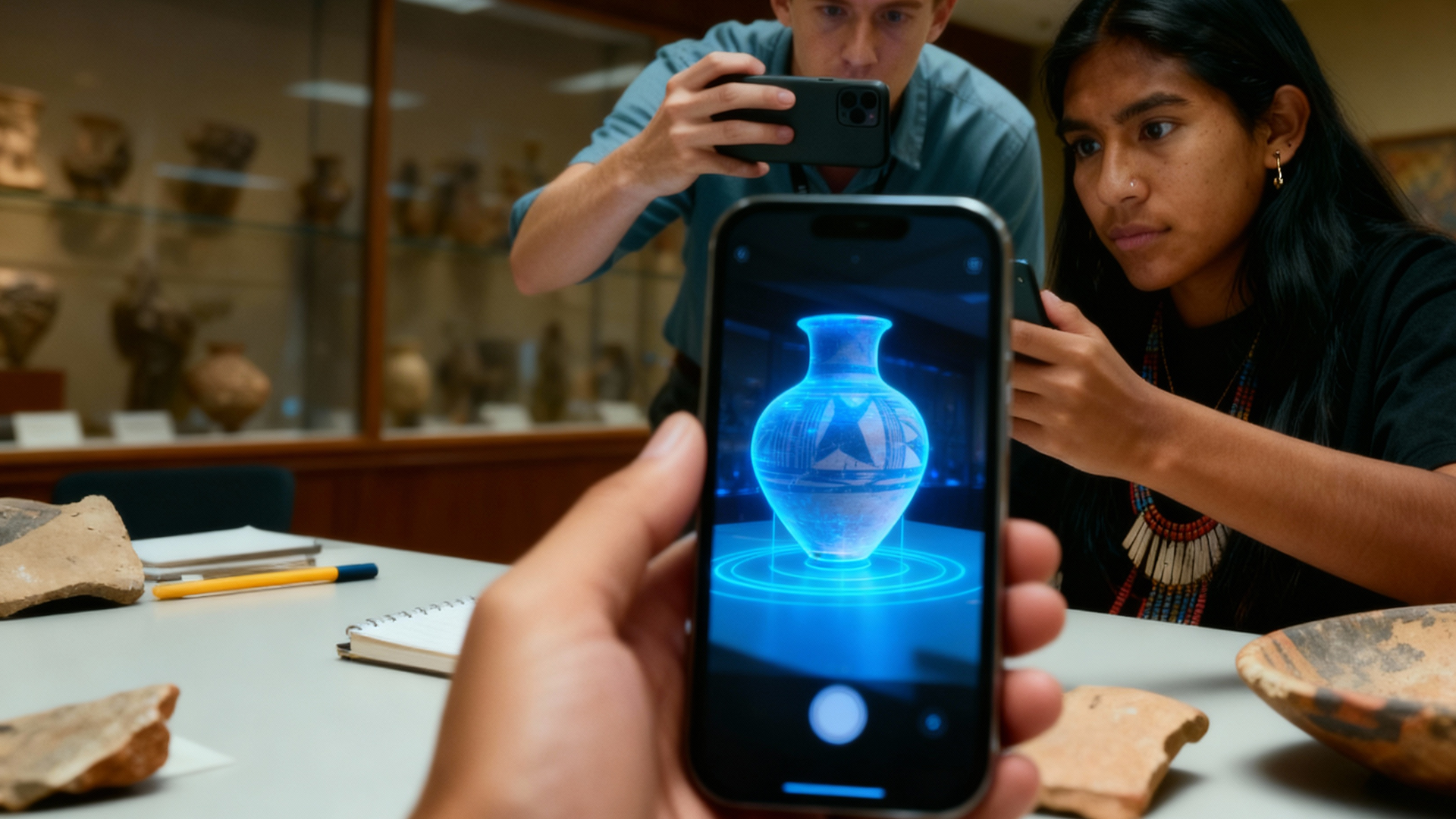
The biggest challenge in learning is making the abstract stick. Augmented Reality (AR) in Education transforms flat textbooks and screens into dynamic, 3D learning environments. Virtual Fudge creates immersive, accessible lessons that accelerate understanding and retention. We turn every classroom—and every kitchen table—into an interactive lab, making complex concepts easy to see, touch, and remember.
Request Your Custom AR Strategy




CHALLENGES
Key Challenges in Education
-

Abstract Concepts Fail to Stick
Many core subjects remain abstract and lack context because they’re presented in flat textbooks or 2D screens, making the material difficult to visualize.
-

High Cost of Labs
Creating deep, hands-on learning requires massive capital investment in specialized physical equipment and ongoing maintenance, limiting access and frequency.
-

Low Retention from Passive Learning
Sitting through lectures or watching non-interactive videos results in rapid information decay, meaning students forget key details shortly after testing.
-

Access and Equity Gaps
Traditional classroom models are rigid, making it difficult to deliver personalized content, which leads to unequal access for students with disabilities or language barriers.
-

Limited Parent/Guardian Engagement
Traditional formats make it difficult to share interactive, real-time examples of a student’s project or progress, hindering at-home support and buy-in.

The Virtual Fudge Solution for AR-Driven Education Growth
Traditional teaching struggles to make abstract concepts tangible and accessible at scale. Virtual Fudge offers a browser-based AR toolkit that supports teachers and learners, accelerating comprehension and memory retention without demanding specialized, expensive equipment. We bring concepts to life where they are most relevant, transforming every lesson into a personalized experience.
-

AR Labs & Models
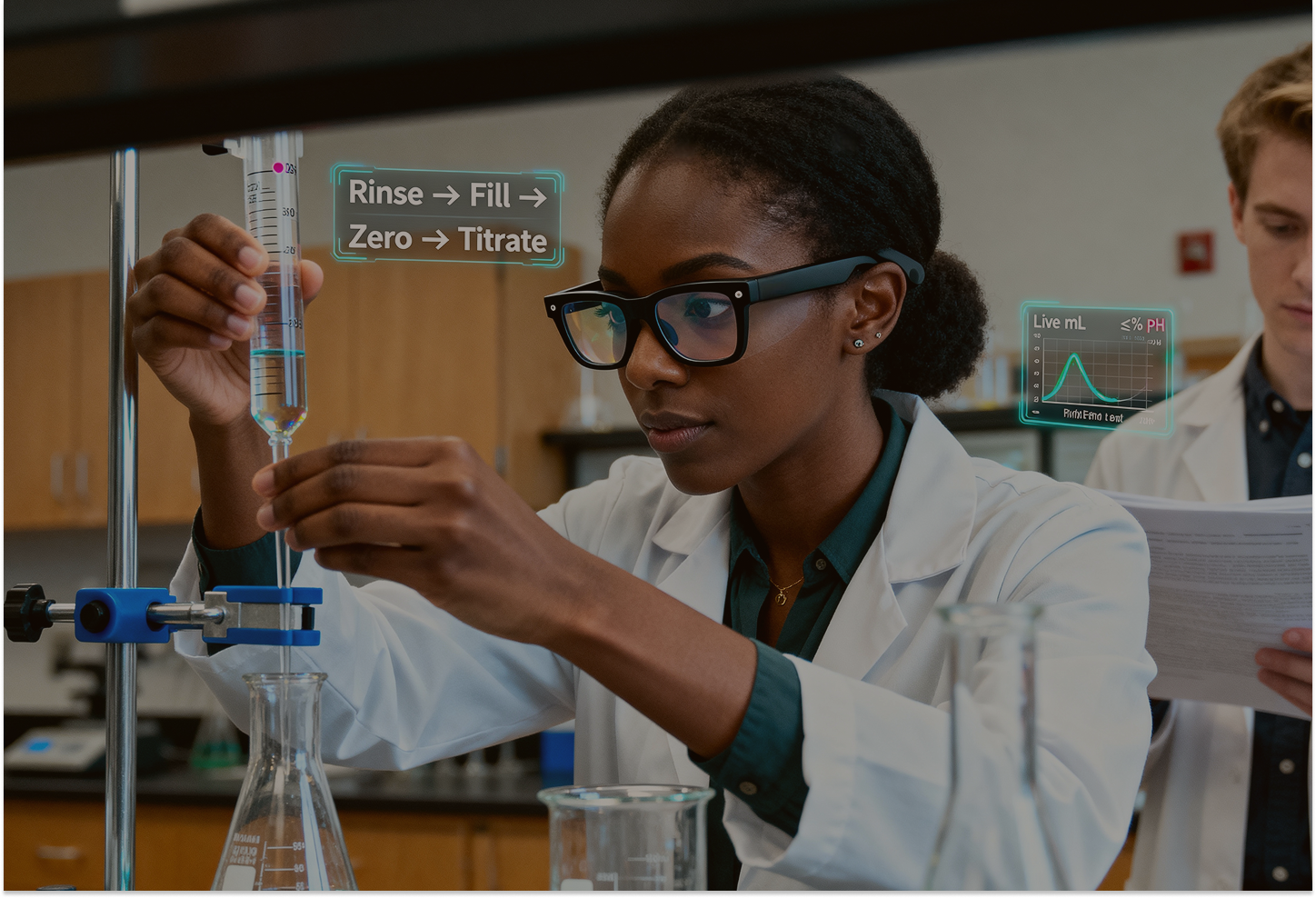
We provide safe, virtual simulations of complex lab experiments and equipment. Students can manipulate 3D models of molecules, machines, or historical artifacts right on their desks, replacing costly physical resources.
-

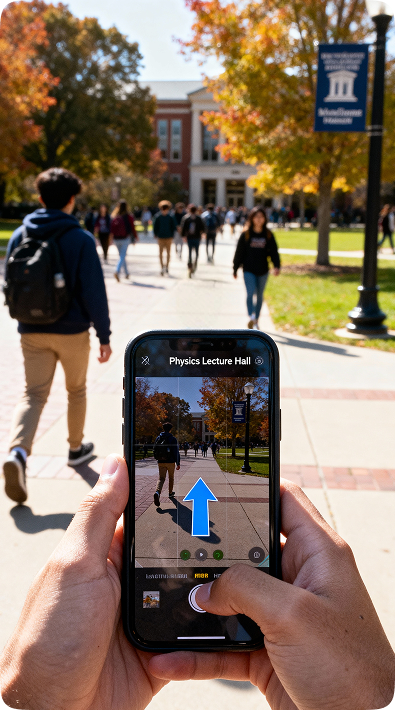
Campus & Museum Layers
We design self-guided, GPS-aware tours for campuses and museums. Travelers and students can access relevant, multilingual information and historical context overlaid onto the real environment.
-

Career & Skills Modules
Students can virtually try trades and tools by practicing procedures (like welding or engine repair) in a low-risk AR environment, bridging the gap between classroom theory and professional practice.
-

Teacher Tools
Our platform includes shareable AR templates and rubrics that allow educators to quickly customize and deploy AR content across classrooms, promoting collaboration and content standardization.
-

Analytics
We move beyond final test scores to track participation and mastery within the AR experience. This gives educators real-time data on student engagement and comprehension for immediate intervention and personalized learning paths.





CHALLENGE
Traditional Marketing vs.
AR Marketing

TRADITIONAL MARKETING
- Read/watch
- One pace
- Anecdotes
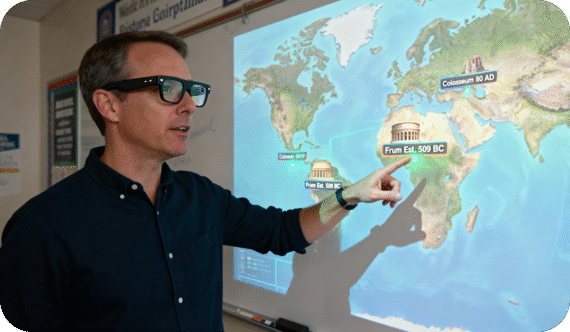
MARKETING WITH VIRTUAL FUDGE AR
- Explore/experiment
- Adaptive scaffolding
- Data‑backed learning signals

Next-Gen Marketing
Launch Your AR Experience
in 3 Simple Steps
-
Step 1
Prioritize & Define Outcomes
Choose one key unit (e.g., cell biology) with low pass rates. Define success as increased test scores and engagement. -
Step 2
Capture & Deploy
Our team converts your lesson into an AR model. Educators easily deploy the AR via WebAR on existing devices.
-
Step 3
Measure & Scale
Track student activity and comprehension rates. Lock in the proven curriculum and roll out to sister departments or grade levels.
Proven Results in
Education
-
90%
Of participants reported enhanced comprehension
Source: ResearchGate
-
Higher levels of engagement
Source: MDPI
-
Promotes higher knowledge retention
Source: MDPI

AR makes abstract learning tangible
and inclusive
Universities use AR to let students visualize complex molecules on their desk or explore historical sites rebuilt on the quad. Studies show AR significantly boosts comprehension, with 90% of participants reporting enhanced understanding, ensuring learning is active and concepts stick far longer than with passive lectures.
GET A CUSTOM QUOTE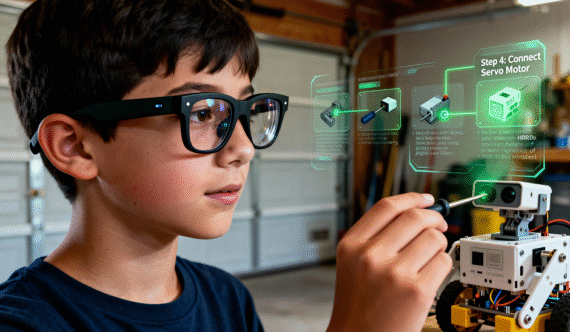




FAQ
WE DEPLOY THE SOLUTION AND PROVIDE YOU WITH DETAILED ANALYTICS TO TRACK ROI AND CUSTOMER ENGAGEMENT.
How does AR help students grasp abstract STEM concepts more effectively?
Is AR learning accessible on school devices, and does it require expensive software?
Does AR improve knowledge retention better than traditional video lectures?