AR in Training: Learn by Knowing, Not Guessing
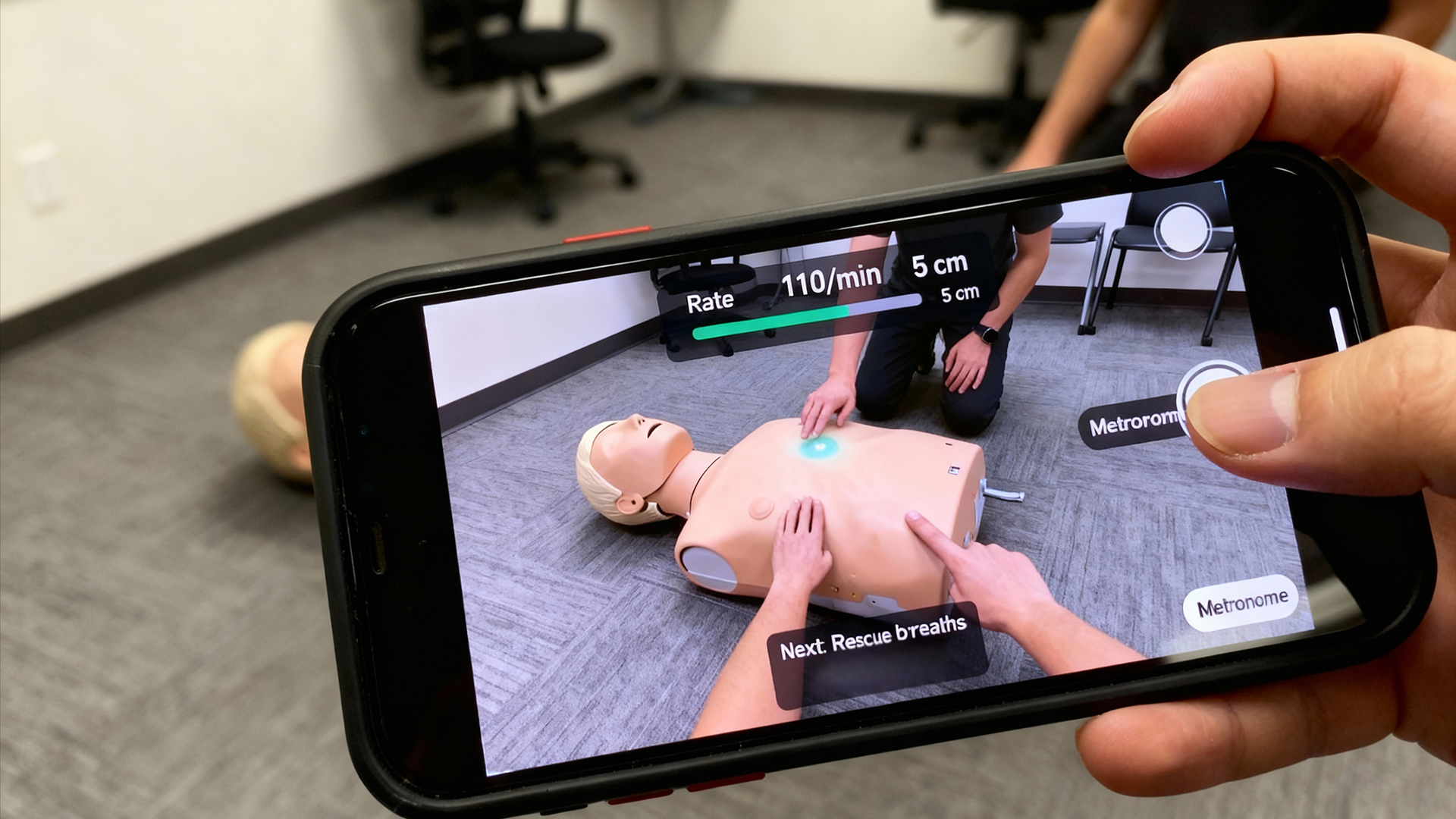
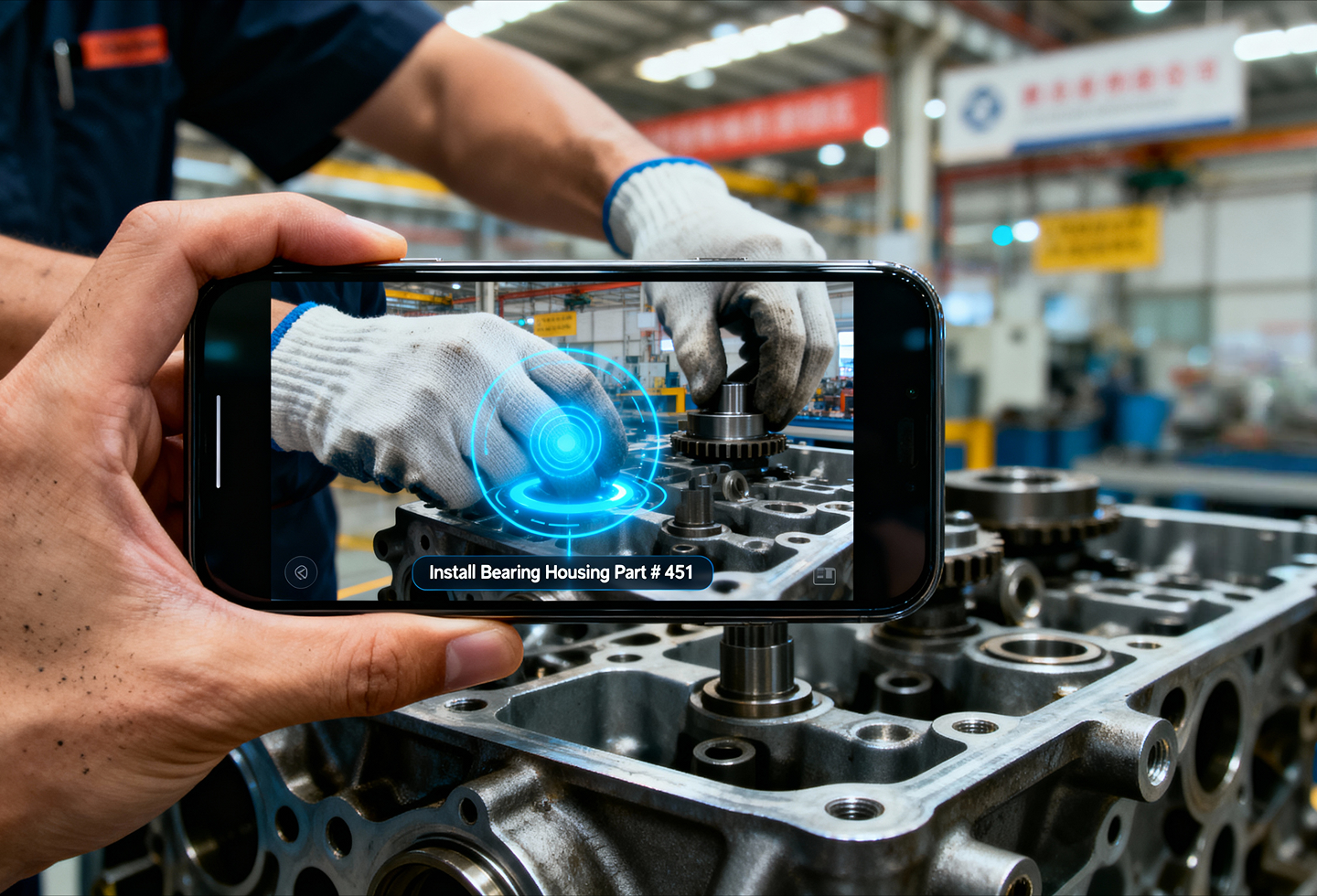
Let’s be honest, manuals are outdated. Your employees need instant, hands-on support. Virtual Fudge builds intuitive AR training workflows that layer step-by-step instructions and visuals right over the equipment. This makes complex tasks easy to master, minimizes costly errors, and ensures consistency across shifts. It can work on the mobile devices they already use or smart glasses.
Request Your Custom AR Strategy




CHALLENGES
Key Challenges in Training
-

Paper SOPs are often ignored
We convert static manuals into interactive, visual steps that workers actually follow easily on the floor.
-

Expert time is scarce
Capture tribal knowledge once and scale it across shifts and sites with video/AR guidance.
-

Training doesn’t carry over on the floor
Real-time overlays provide clear, contextual guidance at the workstation.
-

Certification is a paperwork headache
Automatic tracking and sign-off create tidy records you can trust.
-

Updates don’t reach distributed teams
Cloud‑published steps push instantly, keeping procedures current everywhere.


The Virtual Fudge Solution for AR-Driven Training Growth
Our AR training systems can turn every workstation into a coach and every procedure into a measurable performance.
-

Guided Workflows
Hands‑busy, eyes‑up steps with timers and visual checks.
-

Skill Simulations
Practice high‑risk tasks safely with repeatable scenarios.
-

Knowledge Capture
Record best practices from veterans once; scale forever.
-

Track & Sync
Automatically update employee records when they finish.
-

Analytics
Spot bottlenecks by step, site, or role.






CHALLENGE
Traditional Marketing vs.
AR Marketing
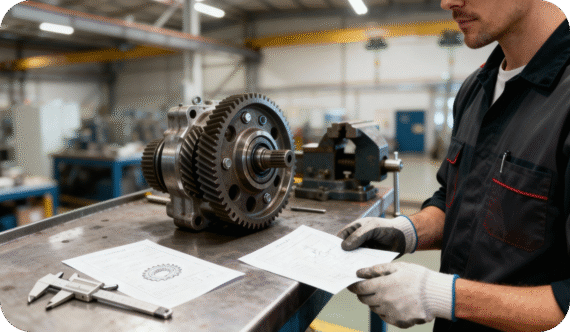
TRADITIONAL MARKETING
- One-time classes
- Static PDFs
- Guesswork
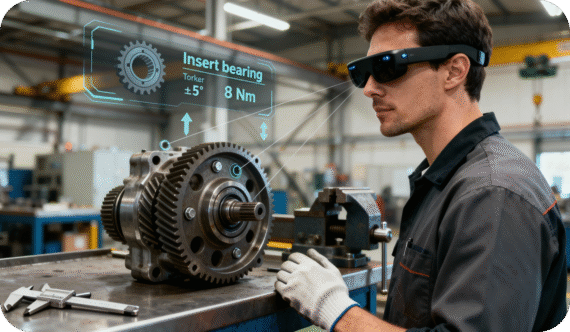
MARKETING WITH VIRTUAL FUDGE AR
- Ongoing coaching
- Living procedures
- Measurable competence

Next-Gen Marketing
Launch Your AR Experience
in 3 Simple Steps
-
Step 1
Discovery & KPI Definition
Identify 2–3 high‑impact SOPs (safety, quality, cost) and define success metrics (time‑to‑competence, rework rate). -
Step 2
Build, Pilot & Validate
Capture expert method(s), create AR steps, and pilot with one team. Compare baseline vs. AR outcomes and gather frontline feedback. -
Step 3
Scale, Govern & Optimize
Template procedures, add role‑based variants, connect LMS/HRIS, and create a change‑management cadence for continuous improvement.
Proven Results in
Training
By placing interactive steps directly in the workflow, you instantly standardize execution across shifts and automate your audit logs. The impact compounds quickly: you capture expert knowledge, de-risk training through simulation, and use real-time analytics to spot bottlenecks. It turns training from a compliance checkbox into a performance engine.
-
+50%
Faster skill learning
Source: Parksoft
-
+40%
Improvement of new hire productivity
Source: CBT
-
40%
Error reduction
Source: AIDAR Solutions

Transform Training with AR
Augmented Reality for onboarding, safety, and equipment setup helps staff learn faster and perform better. We see healthcare teams perfecting device workflows, manufacturers speeding up changeovers, and retail staff mastering launches in record time. It even extends to the court, helping basketball programs visualize plays and refine footwork. Result often show universal: fewer errors, faster competency, and audit-ready documentation.
GET A CUSTOM QUOTE





FAQ
WE DEPLOY THE SOLUTION AND PROVIDE YOU WITH DETAILED ANALYTICS TO TRACK ROI AND CUSTOMER ENGAGEMENT.
How is AR different from VR, and why should we choose AR for employee training?
You should choose AR when the training must be performed hands-on, in a real-world setting. AR is ideal for tasks like equipment maintenance, complex assembly, or quality control, as it guides the employee through the actual process without isolating them from their tools or workspace.
Which industries are seeing the highest ROI from implementing AR training right now?
Manufacturing & Automotive: Using AR for assembly line training, complex machine repair, and quality assurance checks.
Healthcare & Pharma: Guiding nurses or technicians through precise equipment setup and surgical preparation checklists.
Energy & Utilities: Providing remote assistance to field technicians performing maintenance on specialized equipment in the field.
Sports: The core benefit of AR in the sports industry is that is can accelerate athlete skill mastery through real-time visual data.
Does AR training require special, expensive hardware or new employee onboarding?
This approach drastically lowers the entry barrier. Employees use a familiar device to scan equipment or a workspace, and the digital guidance overlays instantly. This minimizes the need for extensive hardware training and allows companies to scale the program quickly and cost-effectively across geographically dispersed teams.